
For talent
Eligibility and finding your first remote job
Use honest transferable evidence, realistic searches, and a complete profile when pursuing your first remote role.
RemoteFilipino is designed for Filipino talent pursuing remote work with employers. Individual listings set their own skills, experience, schedule, location, equipment, and communication requirements. The platform does not guarantee that every applicant is eligible for every role or that a profile will lead to employment.
You do not need to invent remote experience
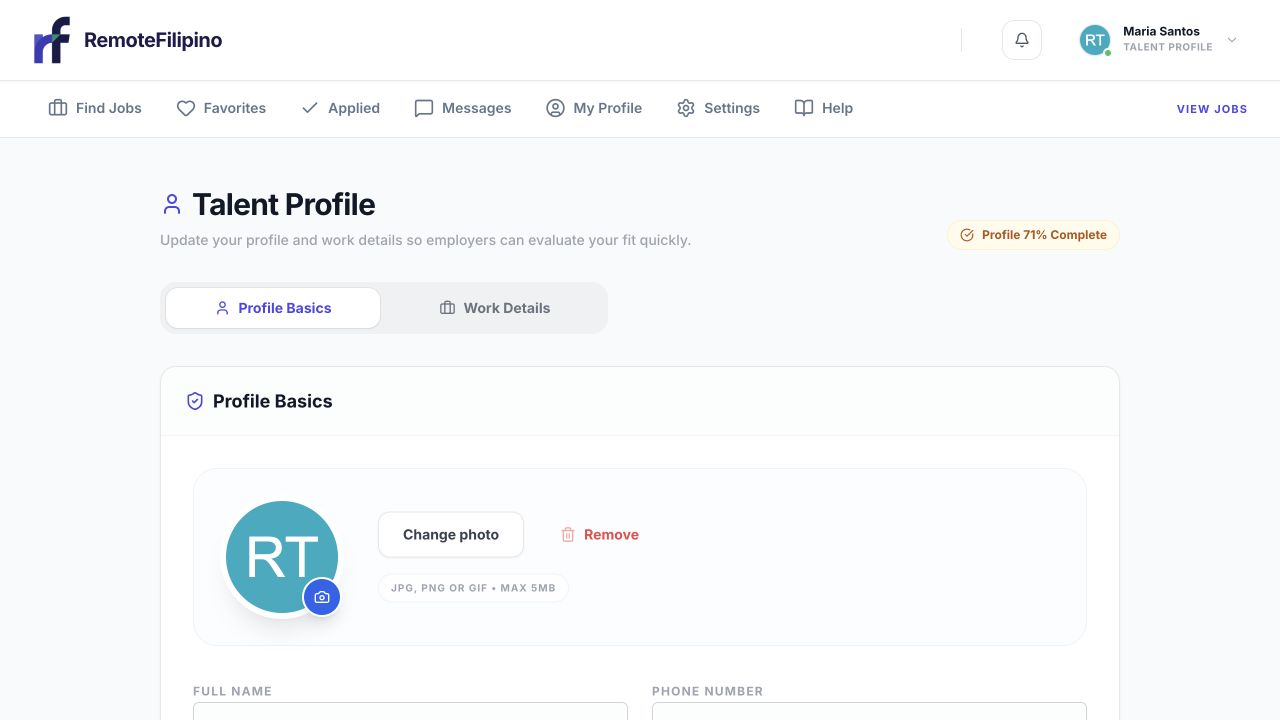
A practical first profile focuses on accurate basics, work details, skills, and availability.
If you have not held a remote job before, use evidence from office work, freelance projects, school, volunteering, a family business, or independent projects when it genuinely demonstrates the required skill. Explain what you did, which tools you used, how you communicated, and what outcome you produced. Label unpaid or personal projects accurately.
Transferable experience can include customer communication, calendar management, spreadsheet work, bookkeeping, order processing, writing, design, research, sales support, data entry, or coordinating tasks across a team. The key is to connect it to the job without overstating seniority.
Build a credible starter profile
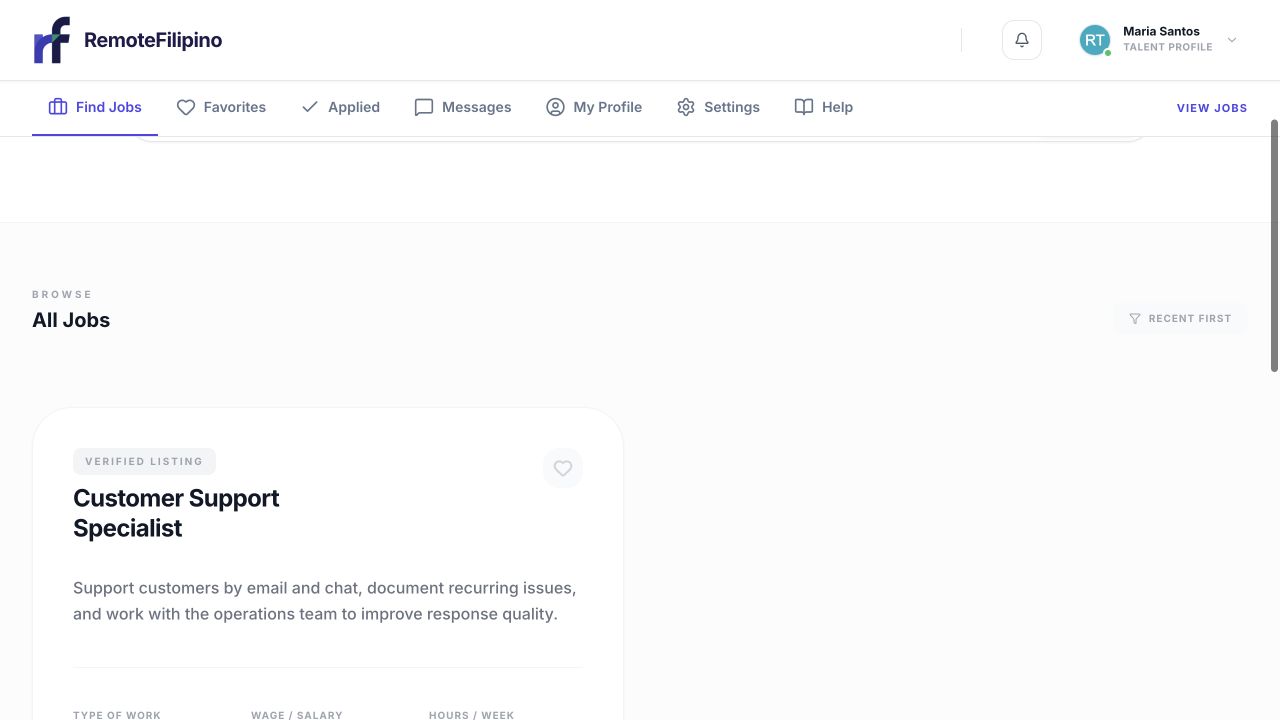
A complete, specific profile is more useful than claiming experience you do not have.
Choose a specific role direction instead of presenting yourself as able to do everything. A focused profile for bookkeeping, customer support, executive assistance, or creative production is easier to assess than an unrelated list of dozens of skills. Add safe samples where appropriate and remove confidential client information.
Your profile should show:
- A role-specific headline
- A short summary with concrete tasks and tools
- Accurate education and work history
- Skills you can demonstrate in an interview or test
- Work hours and connectivity you can actually maintain
- A readable PDF résumé consistent with the profile
Search realistically
Start with entry-level or junior roles where your existing evidence covers the essentials. Search for several related job titles and tools. Read the full schedule and experience requirements before applying. A role described as entry-level can still require a particular tool or communication standard; the complete listing controls.
Do not apply to every job merely to gain visibility. Apply Points and job application limits are designed to pace submissions, and a small set of accurate applications is more useful than a large set of weak ones.
Prepare for employer screening
Be ready to explain your work setup, internet reliability, schedule, communication habits, and examples. Test your microphone and camera before an interview. Research the company through public sources and ask clear questions about responsibilities, supervision, compensation, working hours, and the next step.
Never pay an employer for a job, accept a money-transfer task, share banking credentials, or reveal a sign-in code. Legitimate hiring can include reasonable assessments, but unpaid work that creates significant business value deserves caution.
If you are not getting responses
Check whether your applications closely match essential requirements, whether your headline is specific, and whether examples prove the claimed skills. Rewrite generic answers, remove unsupported claims, and search for roles closer to your current experience. A lack of response is not necessarily a technical error and support cannot force employers to reply.
If you believe profile status or application delivery is broken, contact support with links, dates, exact status text, and a screenshot. Do not send passwords, codes, or unnecessary identity documents.
Related guides
Was this article helpful?
Tell us whether this answered your question.